
SKU-Level Retail Analytics: What Enterprise Brands Need to Track
- May 14
- 4 min read

In today’s highly competitive retail market, enterprise brands can no longer rely only on category-level reporting or broad sales summaries. Modern retail success depends on understanding what is happening at the SKU level. Every product variation, size, color, packaging type, and regional listing contributes valuable business intelligence that can directly impact profitability, inventory efficiency, and customer satisfaction.
SKU-level retail analytics helps brands gain detailed visibility into product performance across ecommerce marketplaces, retail websites, mobile apps, and physical store channels. Instead of analyzing product groups collectively, businesses can evaluate each SKU individually and make faster, more accurate decisions.
As online competition continues to grow, brands that actively track SKU-level metrics are better positioned to optimize pricing, improve stock availability, strengthen digital shelf presence, and respond to changing customer demand in real time.
What is SKU-Level Retail Analytics?
SKU-level retail analytics refers to the process of monitoring, analyzing, and interpreting performance data for individual stock keeping units (SKUs). A SKU is a unique identifier assigned to a specific product variation within a company’s inventory system.
For example, a sports shoe brand may sell the same shoe model in multiple sizes and colors. Each variation has its own SKU. Rather than viewing overall sales for the product line, SKU-level analytics allows retailers to analyze the exact performance of each variation separately.
This level of detail helps enterprise retailers understand:
Which products are driving revenue
Which SKUs are underperforming
Which items frequently go out of stock
How pricing changes affect conversions
Which products require promotional support
Enterprise brands use these insights to improve operational efficiency and create stronger retail strategies across all sales channels.
Why SKU-Level Insights Matter for Enterprise Retailers
Retail markets move quickly. Consumer preferences change frequently, competitors update pricing constantly, and inventory availability fluctuates throughout the day. Brands that lack detailed product-level insights often struggle to react in time.
SKU-level analytics provides a more accurate view of retail operations by identifying trends before they become larger problems.
Better Pricing Decisions
Retail pricing strategies work best when supported by real-time SKU data. Brands can monitor competitor pricing, identify aggressive discounting, and analyze price elasticity for specific products.
Instead of reducing prices across an entire category, businesses can adjust pricing only for the SKUs that require optimization. This protects profit margins while remaining competitive.
Improved Inventory Management
Out-of-stock products can lead to lost sales and reduced customer trust. Overstocked products increase storage costs and create inventory inefficiencies.
SKU-level retail analytics helps retailers forecast demand more accurately by analyzing:
Sales velocity
Seasonal demand shifts
Regional purchasing behavior
Promotion performance
Inventory turnover
With better forecasting, brands can maintain healthier inventory levels and reduce operational waste.
Enhanced Customer Experience
Customers expect product availability, accurate listings, competitive pricing, and consistent shopping experiences across every platform.
Tracking SKU-level data helps businesses identify issues such as:
Missing product descriptions
Inconsistent product images
Incorrect pricing
Low product ratings
Availability gaps
Improving these areas strengthens the customer experience and supports long-term brand loyalty.
Key Metrics Enterprise Brands Should Track
Successful retail analytics programs focus on tracking actionable metrics that directly influence business performance. Below are some of the most important SKU-level metrics enterprise brands should monitor.
Sales Performance by SKU
Understanding which SKUs generate the highest revenue is essential for product planning and inventory decisions.
Brands should regularly monitor:
Total sales volume
Revenue contribution
Units sold
Conversion rates
Repeat purchase rates
These insights help retailers identify high-performing products and allocate resources more effectively.
Real-Time Pricing Intelligence
Retail competition is heavily influenced by pricing. Monitoring SKU-level pricing across multiple marketplaces helps brands maintain competitive positioning without sacrificing margins.
Important pricing metrics include:
Competitor price comparisons
Average selling price
Promotional pricing trends
MAP compliance monitoring
Price fluctuation frequency
Real-time pricing analytics enables faster decision-making and supports more strategic promotional planning.
Product Availability Tracking
Availability is one of the most critical retail performance indicators. Even strong marketing campaigns can fail if products are unavailable when customers are ready to buy.
SKU-level availability tracking helps retailers identify:
Out-of-stock frequency
Stock replenishment delays
Regional inventory shortages
Marketplace listing interruptions
These insights allow brands to improve supply chain coordination and reduce missed sales opportunities.
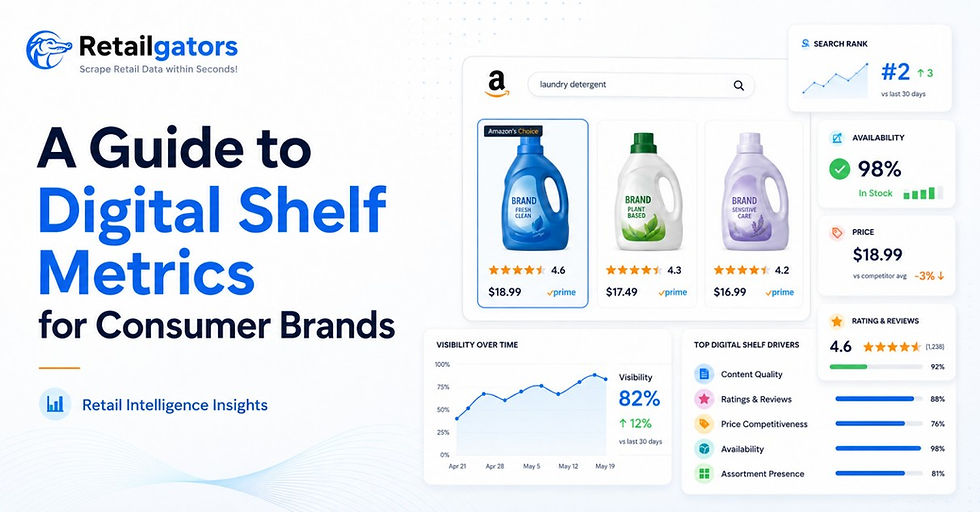
Digital Shelf Visibility
The digital shelf plays a major role in ecommerce success. Enterprise brands need visibility into how products appear across online marketplaces and retail platforms.
Important digital shelf metrics include:
Product ranking positions
Search visibility
Content completeness
Product image quality
Customer review scores
Buy box ownership
Tracking these elements helps brands optimize product discoverability and improve conversion performance.
Promotion and Discount Analysis
Promotions often influence customer purchasing decisions, but not all discounts deliver positive ROI.
SKU-level analytics helps brands evaluate:
Promotion effectiveness
Revenue impact
Margin changes
Discount-driven sales spikes
Long-term customer behavior
This allows retailers to design smarter promotional campaigns based on actual performance data rather than assumptions.
How Enterprise Brands Use SKU-Level Retail Analytics
Enterprise retailers use SKU-level analytics in multiple departments to improve decision-making across the organization.
Ecommerce Teams
Ecommerce teams use SKU analytics to improve product visibility, optimize pricing, and monitor competitor activity across online marketplaces.
Supply Chain Teams
Supply chain departments rely on SKU-level insights for inventory forecasting, warehouse planning, and demand prediction.
Marketing Teams
Marketing professionals analyze SKU-level performance to identify successful campaigns, improve targeting, and personalize promotions.
Category Managers
Category managers use detailed product analytics to optimize assortments, remove low-performing products, and identify expansion opportunities.
The Growing Role of Retail Data Collection
Modern retail analytics depends heavily on high-quality retail data collection. Enterprise brands often gather large-scale product data from ecommerce websites, marketplaces, and competitor platforms to support analytics initiatives.
This includes collecting information such as:
Product pricing
Inventory availability
Product reviews
Search rankings
Promotional data
Product specifications
Structured retail data allows brands to build accurate dashboards, automate reporting, and improve business forecasting.
As the retail landscape becomes more data-driven, businesses that invest in scalable retail analytics systems gain a major competitive advantage.
Final Thoughts
SKU-level retail analytics has become a critical requirement for enterprise retailers looking to stay competitive in modern commerce environments. Detailed product-level insights help brands improve pricing strategies, optimize inventory management, enhance digital shelf performance, and respond quickly to changing market conditions.
Instead of relying on broad reporting, enterprise businesses now need precise visibility into individual product performance across every retail channel. Brands that actively track SKU-level metrics are better equipped to improve operational efficiency, increase revenue opportunities, and deliver stronger customer experiences.
As ecommerce competition continues to intensify, data-driven retail decision-making will play an even greater role in long-term business growth.

Comments