
How Retailers Identify Best-Selling Products Using Data Intelligence
- Apr 8
- 5 min read
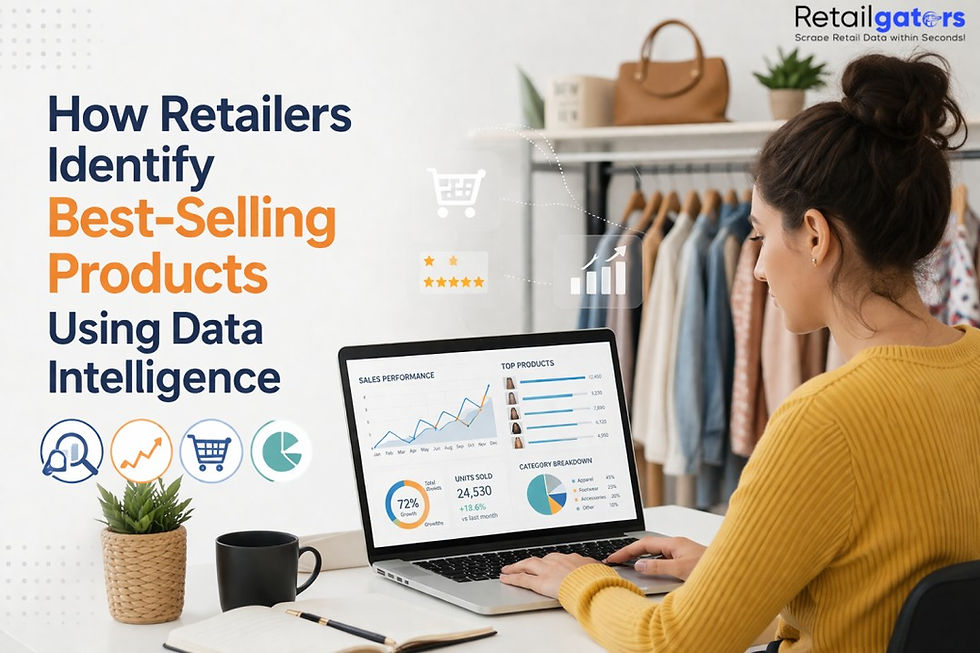
In today’s competitive retail market, staying ahead of the curve is critical for success. Retailers often rely on data intelligence to uncover insights that drive strategic decisions. One of the most powerful applications of data intelligence in retail is identifying best-selling products. Understanding which products are likely to perform well allows businesses to optimize their offerings, enhance inventory management, and ultimately boost sales. In this blog, we will explore how retailers use data intelligence to identify these top-performing products and gain a competitive edge in the market.
What is Data Intelligence in Retail?
Data intelligence refers to the ability to collect, analyze, and derive actionable insights from various data sources, enabling businesses to make more informed decisions. In retail, this typically involves using advanced tools and software to process large volumes of data, from sales records and customer behaviors to market trends and competitor activity. The insights drawn from this data can help retailers understand customer preferences, predict demand, and make proactive decisions.
Retailers use several types of data intelligence tools, including predictive analytics, data visualization, and business intelligence dashboards, to monitor, track, and evaluate their product performance. With these tools, they can identify which products are selling well, determine why they’re successful, and adjust strategies accordingly.
How Data Intelligence Helps Identify Best-Selling Products
Analyzing Historical Sales Data One of the most straightforward ways retailers identify best-selling products is by analyzing historical sales data. By reviewing past performance, retailers can pinpoint which products consistently generate the highest sales. This includes tracking sales volume, frequency, and seasonality patterns. Data intelligence tools can automatically categorize products based on their sales performance over a defined period, helping retailers prioritize top-selling items and identify products with long-term growth potential. For instance, if a particular product category consistently performs well during certain months, retailers can prepare by increasing inventory and launching promotions during peak seasons.
Customer Behavior and Preferences In today’s digital-first world, customer behavior plays a critical role in determining the success of a product. Retailers can collect data from customer interactions, including website visits, clicks, search patterns, and purchase history. By leveraging this behavioral data, retailers can uncover insights into what customers are looking for and which products they prefer. Data intelligence tools can analyze customer behavior across various channels, including online stores, physical locations, and mobile apps. This allows retailers to track how often customers engage with specific products and whether they are likely to purchase them. By segmenting this data, retailers can gain a deeper understanding of what resonates with each customer demographic, helping them tailor their offerings accordingly.
Demand Forecasting with Predictive Analytics One of the most powerful applications of data intelligence is predictive analytics. This technique uses historical data combined with machine learning algorithms to forecast future trends and product demand. By analyzing data from sales trends, seasonality, and other market indicators, predictive analytics can identify which products are likely to become best-sellers in the future. For example, predictive models can analyze past sales data and cross-reference it with factors such as weather patterns, economic conditions, and consumer sentiment. By doing so, retailers can predict shifts in demand for particular products, allowing them to optimize inventory and marketing efforts. Predictive analytics helps retailers avoid stockouts, ensure they have the right products available at the right time, and adjust pricing strategies based on forecasted demand.
Competitor Insights and Market Trends Competitor analysis is another vital aspect of identifying best-selling products. By tracking competitors’ product offerings, pricing, and promotions, retailers can gain insights into the products gaining traction in the market. Many data intelligence tools come with competitive intelligence features that allow retailers to monitor competitors in real-time. Retailers can analyze competitors’ sales data, customer reviews, and social media activity to uncover product trends that might be relevant to their own business. For example, if a competitor’s product is receiving positive reviews and high demand, it may indicate a market shift that a retailer can capitalize on. In addition, tracking market trends through data intelligence tools allows retailers to spot emerging product categories. By staying on top of these trends, they can introduce new products to their catalog before they become mainstream, giving them a competitive advantage.
Social Media and Online Sentiment Analysis Social media has become a powerful tool for understanding customer sentiment and identifying products that are gaining popularity. Social media platforms like Instagram, Facebook, and Twitter provide a wealth of real-time data that can be analyzed to determine which products are trending. Data intelligence tools can aggregate social media mentions, likes, shares, and comments to gauge public interest in specific products. By analyzing the sentiment of these conversations, retailers can assess which products resonate most with their target audience. Positive social media buzz and customer engagement often indicate that a product is a best-seller in the making. Online sentiment analysis tools also help track customer reviews on eCommerce platforms, blogs, and forums. Positive feedback, customer recommendations, and high review ratings often point to products with high sales potential.
Sales Funnel Insights and Conversion Rates A thorough analysis of the sales funnel can also help identify best-selling products. Retailers can use data intelligence tools to track conversion rates at each stage of the sales process—from product views to checkout. This analysis reveals which products have the highest conversion rates and which are struggling to move through the funnel. For example, if a product receives a high number of views but low sales, it may indicate a problem with the product’s description, pricing, or visual appeal. Data intelligence tools can pinpoint these bottlenecks and allow retailers to make data-driven improvements to product listings, thereby boosting conversion rates and increasing sales.
Inventory and Supply Chain Optimization Identifying best-selling products isn’t just about demand forecasting; it’s also about optimizing inventory and supply chains. Data intelligence tools track product stock levels in real-time, helping retailers manage their inventory effectively. By analyzing which products are moving quickly and which are slow to sell, retailers can adjust their stock levels accordingly. This ensures that popular products are always in stock, while slow-moving items can be promoted or removed from the catalog. In addition, data intelligence helps retailers track supplier performance, ensuring that products are restocked in a timely manner. This prevents delays that can lead to stockouts and missed sales opportunities.
Best Practices for Retailers Using Data Intelligence
Integrate Multiple Data Sources: Ensure that you’re collecting data from all relevant sources—sales records, customer behavior, competitor analysis, social media, and market trends. This comprehensive data will provide a clearer picture of which products are likely to perform best.
Use Data Visualization Tools: Data intelligence tools are most effective when the insights can be visualized. Use dashboards and charts to monitor product performance, sales trends, and customer behavior in real-time.
Prioritize Actionable Insights: While data intelligence provides a wealth of information, not all of it is equally important. Focus on actionable insights that directly impact product selection, pricing, inventory, and marketing.
Monitor Trends Regularly: Retail is a dynamic industry, and consumer preferences can shift rapidly. Continuously track market trends and adjust strategies accordingly to stay ahead of the competition.
Conclusion
Data intelligence is transforming the way retailers identify best-selling products and make strategic decisions. By leveraging advanced tools and techniques such as predictive analytics, customer behavior analysis, and competitor insights, retailers can stay ahead of trends, optimize their product offerings, and increase sales. The ability to identify top-performing products before they reach the mainstream gives retailers a competitive edge and drives growth in an increasingly crowded marketplace.
By incorporating data intelligence into your business strategy, you’ll not only identify the best products to sell but also ensure that your entire retail operation is aligned with the needs and demands of your customers.

Comments